
Ultimate Guide to MCT Oil for Sustained Energy
by Joanna Foley
·
MCT oil is a fast-acting energy source that fuels both body and brain. Extracted from coconut or palm kernel oil, it’s a favorite among keto dieters, athletes, and anyone needing steady energy. Unlike regular fats, MCTs bypass complex digestion, heading straight to the liver for immediate energy or ketone production. This makes it ideal for mental clarity, physical performance, and maintaining ketosis.
Key Takeaways:
- What It Is: MCT oil is a concentrated source of medium-chain triglycerides, found in coconut oil, palm kernel oil, and dairy.
- Why It Works: Quickly absorbed and converted into energy or ketones, bypassing the lymphatic system.
- Benefits: Boosts brain function, supports ketosis, and enhances exercise endurance.
- How to Use: Add to coffee, smoothies, or meals. Start with 1 teaspoon daily, gradually increasing to 1–2 tablespoons.
- Best Types: Opt for oils rich in C8 (caprylic acid) or a mix of C8 and C10 for faster energy.
Whether you’re looking to fuel workouts, improve focus, or support a low-carb diet, MCT oil is a simple addition to your routine.
Drink MCT Oil Every Day and This Will Happen!
sbb-itb-c7947de
How MCT Oil Provides Sustained Energy
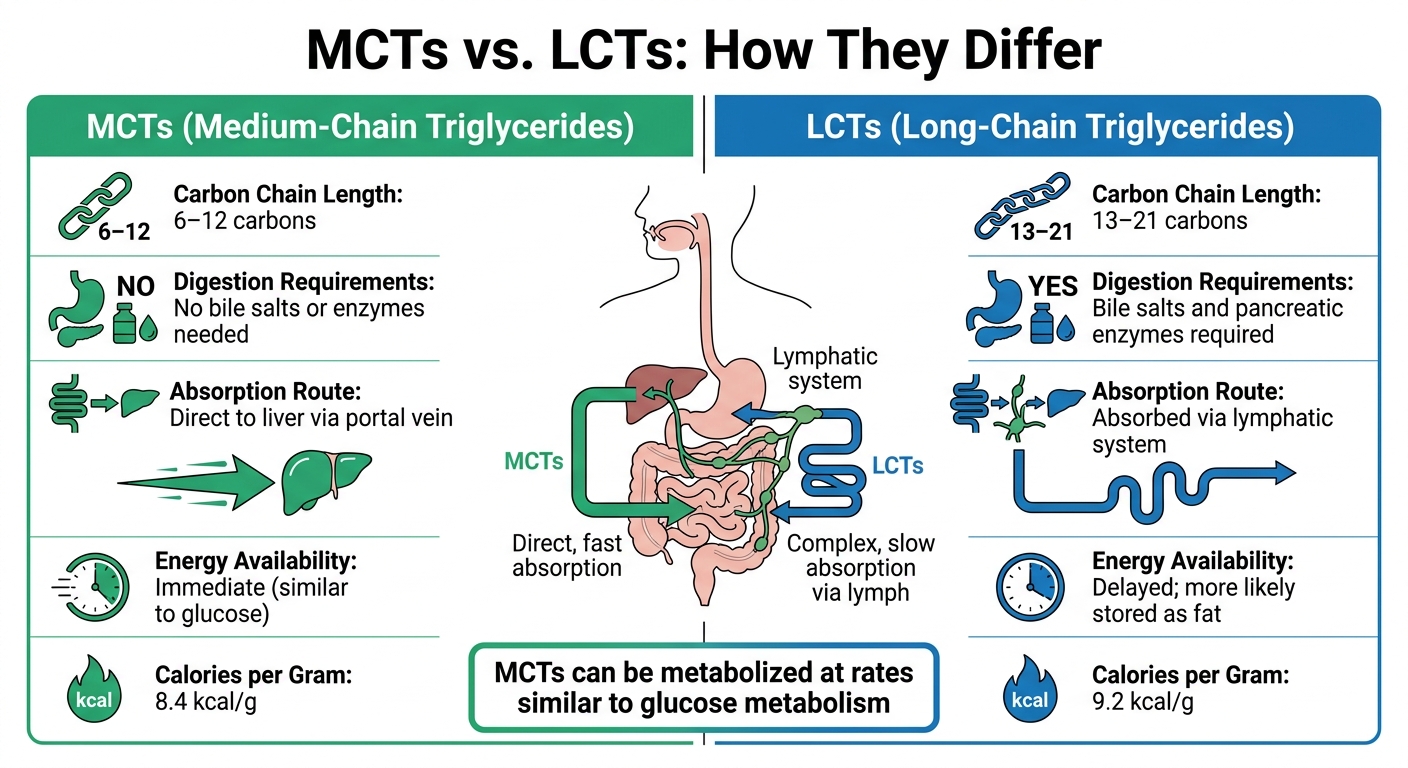
MCTs vs LCTs: Digestion and Energy Comparison
Fast Digestion and Ketone Production
MCT oil is known for delivering sustained energy thanks to its quick metabolism. Unlike other fats, medium-chain triglycerides (MCTs) bypass the need for bile salts or pancreatic enzymes during digestion. Instead, they take a direct route from the gastrointestinal tract to the liver through the portal vein. Once in the liver, MCTs are rapidly broken down through beta-oxidation, producing acetyl-CoA, which is then converted into ketones - specifically beta-hydroxybutyrate (BHB). These ketones, being water-soluble, can cross the blood-brain barrier and serve as an immediate energy source for the brain.
What’s particularly impressive is how efficiently MCTs, especially caprylic acid (C8), boost ketone levels. Research shows that C8 increases ketone production nearly four times more effectively than coconut oil. This explains why concentrated MCT oils, which focus on C8 and C10, often outperform coconut oil for energy, even though coconut oil naturally contains about 55% MCTs.
This rapid digestion and energy conversion process is a stark contrast to how long-chain fats are processed.
MCTs vs. Long-Chain Triglycerides (LCTs)
MCTs differ significantly from long-chain triglycerides (LCTs) in both structure and how the body uses them for energy. LCTs, commonly found in foods like nuts, fatty fish, and most cooking oils, have a carbon chain length of 13 to 21 atoms, compared to MCTs’ 6 to 12. Because of this difference, LCTs require bile salts and pancreatic enzymes for digestion, travel through the lymphatic system, and depend on a carnitine transporter (CPT1) to enter mitochondria for energy production. On the other hand, MCTs skip these steps, diffusing directly into mitochondria and providing energy almost as quickly as glucose. As Ketogenic.com explains:
"MCTs can be metabolized at rates similar to glucose metabolism, which is why they may be considered a superior fat source".
| Feature | MCTs | LCTs |
|---|---|---|
| Carbon Chain Length | 6–12 carbons | 13–21 carbons |
| Digestion Requirements | No bile salts or enzymes | Bile salts and pancreatic enzymes required |
| Absorption Route | Direct to liver via portal vein | Absorbed via the lymphatic system |
| Energy Availability | Immediate, similar to glucose | Delayed; more likely to be stored as fat |
| Calories per Gram | 8.4 kcal/g | 9.2 kcal/g |
This streamlined pathway allows MCTs to be rapidly oxidized in the liver, either for immediate energy or ketone production, rather than being stored as fat.
Key Benefits of MCT Oil for Sustained Energy
MCT oil isn't just about quick energy - it offers a range of perks for both the body and mind.
Increases Energy for Body and Brain
MCT oil provides a powerful energy boost for physical activity and mental focus. Once consumed, MCTs head straight to the liver, where they’re converted into ketones like beta‐hydroxybutyrate. These ketones can cross the blood–brain barrier, fueling the brain and enhancing cognitive function. This process delivers immediate energy to muscles during workouts while supporting mental clarity for tasks that require focus. Plus, MCT oil offers steady energy without the rollercoaster spikes and crashes linked to carbs.
Supports Ketosis for Low-Carb Diets
For anyone on a ketogenic or low-carb diet, MCT oil can help maintain ketosis more effectively. Research involving diabetic adults showed that diets rich in MCTs (with 77% of fat calories from MCTs) required 30% less sugar to stabilize blood sugar levels compared to diets high in long-chain fats. Not all MCTs are created equal, though. Caprylic acid (C8) stands out, being nearly four times more effective than coconut oil at raising ketone levels. These benefits not only support ketosis but also improve endurance during physical activities.
Improves Exercise Endurance
MCT oil can enhance athletic performance by conserving muscle glycogen. It provides a ready alternative energy source, saving muscle carbohydrate stores for when they’re most needed. Registered dietitian Ashley Sobel from Naked Nutrition explains:
"Because we can use MCTs first and spare muscle glycogen, endurance is therefore improved".
Studies on recreational athletes have found that consuming MCTs for just two weeks can extend the duration of high-intensity exercise. Additionally, MCT supplementation has been shown to lower lactate buildup in muscles, reducing fatigue and making workouts feel less challenging. For the best results, take MCT oil about an hour before exercising. Pairing it with carbs, like in a fruit smoothie, can further boost energy output. Effective doses for enhancing fat oxidation during low-intensity exercise typically range from 2 to 6 grams daily.
How to Use MCT Oil
Ways to Add MCT Oil to Your Diet
MCT oil’s mild flavor and aroma make it incredibly easy to incorporate into your daily meals. You can blend it into your morning coffee - popularly known as the Bulletproof method, complete with grass-fed butter - or mix it into tea or low-carb smoothies. It’s also a great addition to cooked dishes, as it can handle heat up to 320°F (160°C). However, it’s better suited for low-heat cooking, not frying. You can even use it as a base for homemade dressings and sauces.
If convenience is what you’re after, products like Lean Joe Bean’s coffee blends already include MCT oil, making it simple to enjoy its benefits. Just one tablespoon of pure MCT oil provides 14 grams of high-quality fats and has about 10% fewer calories than the long-chain fats found in olive oil or avocados. For the best results, you might want to take MCT oil in the morning or about 30 minutes before a workout to give your body an energy boost. Mixing it with food is a great way to add variety to how you use it while seamlessly fitting it into your routine.
Recommended Dosage and Tolerance
Once you know how to add MCT oil to your meals, the next step is understanding the right dosage to maximize its benefits. Starting with small amounts and gradually increasing your intake helps your digestive system adjust and ensures a smooth experience.
Begin with 1 teaspoon daily for the first 3 days. From days 4 to 6, increase to 2 teaspoons, and by day 7, aim for 1 tablespoon. For regular users, a daily maintenance dose of 1–2 tablespoons (15–30 grams) works well. Studies suggest healthy adults can safely consume up to 4–7 tablespoons (60–100 mL) per day, though there’s no officially established upper limit.
"The key is to start small and work your way up. Your body isn't used to MCT oil at first, so you don't want to shock the system with a full dose." – Natural Force
Taking too much too quickly can lead to side effects like cramping, nausea, or digestive upset. To minimize these issues, try blending MCT oil into coffee, smoothies, or dressings rather than consuming it plain.
Choosing the Right Type of MCT Oil
Different types of MCTs provide energy at varying speeds, so it’s helpful to know what each one offers:
| MCT Type | Name | Energy Release Speed | Best Use |
|---|---|---|---|
| C8 | Caprylic Acid | Fastest | Immediate brain fuel and rapid ketone production |
| C10 | Capric Acid | Fast/Medium | Sustained energy and metabolic support |
| C12 | Lauric Acid | Slowest | Antimicrobial benefits; slower energy conversion |
C8 (caprylic acid) delivers the quickest energy boost, making it ideal for those seeking immediate brain fuel and ketone production. C10 (capric acid) offers a balance of quick absorption and sustained support. Meanwhile, C12 (lauric acid), although technically an MCT, behaves more like a long-chain fat, providing slower energy release but with added antimicrobial properties.
For the best energy-boosting results, go for an MCT oil that’s either 100% C8 or a blend of C8 and C10. If your goal is rapid ketone production, avoid oils high in C12. With these tips, you can choose the right MCT oil to meet your energy and wellness needs.
Dosage Guidelines, Side Effects, and Selection Tips
Safe Intake Levels
Getting the dosage right is crucial for reaping MCT oil's energy-boosting benefits. For most healthy adults, consuming about 1 tablespoon (15 mL) 1–3 times a day is considered safe. Each tablespoon contains 14 grams of fat. Research suggests that up to 1 gram of MCT per kilogram of body weight daily is safe, with some studies even using doses as high as 100 mL per day for therapeutic purposes. However, to avoid digestive issues, it's best to stay under 7 tablespoons (105 mL) per day. Registered dietitian Anthony DiMarino from Cleveland Clinic advises:
"MCT oil would be safe in small doses for most generally healthy individuals."
If you're planning to spread out your intake, try dividing it across meals - like breakfast, lunch, and dinner - rather than consuming it all at once. Taking MCT oil with food or mixing it into beverages like coffee can also help with digestion and absorption. Exceeding recommended amounts, though, might lead to discomfort.
Potential Side Effects
MCT oil can sometimes cause side effects like diarrhea, nausea, cramping, bloating, and gas. These effects are often tied to the dose: diarrhea is more common at doses above 20 grams, while abdominal cramping tends to occur above 50 grams. In one study involving Alzheimer's patients, 64% experienced side effects - such as vomiting and diarrhea - when taking 3 tablespoons daily. To reduce these issues, try consuming MCT oil with meals instead of on an empty stomach. Alternatively, MCT powder may be gentler on the stomach, as it releases more gradually due to its fiber matrix.
Certain individuals should avoid MCT oil altogether. For example, those with Medium-chain acyl-CoA dehydrogenase deficiency (MCADD) cannot properly process these fats. If you have heart disease or fatty liver disease, use caution. Since MCT oil is nearly 100% saturated fat, it’s worth noting that the American Heart Association recommends limiting saturated fat to 5–6% of daily calories - about 13 grams on a 2,000-calorie diet.
How to Choose Quality MCT Oil
Selecting a high-quality MCT oil can make all the difference. Look for products that clearly list their fatty acid composition. The best options are 95–100% pure MCTs, with a focus on C8 (caprylic acid) and C10 (capric acid), as these provide the quickest energy boost. Steer clear of products labeled as "liquid coconut oil", which often contain higher amounts of C12 (lauric acid). Lauric acid behaves more like a long-chain fat and doesn’t offer the same rapid energy benefits.
For added peace of mind, choose oils that have undergone third-party testing. Look for brands that display a GMP (Good Manufacturing Practices) stamp on their labels to ensure purity and safety. If environmental impact is a concern, opt for MCT oil derived from sustainably sourced coconuts or palm kernels to avoid contributing to deforestation.
For an easy, hassle-free option, consider products like Lean Joe Bean's coffee, which already includes MCT oil for a convenient energy boost.
Conclusion
MCT oil provides a steady energy source without the crashes often associated with carb-based fuels. Thanks to the way medium-chain triglycerides are processed - bypassing standard digestion and heading straight to the liver - they quickly convert into ketones. These ketones act as an immediate energy supply for both your body and brain. This makes MCT oil a great option for those following low-carb or ketogenic diets, as well as anyone aiming to boost mental focus, enhance exercise performance, or work toward weight management goals.
If you're new to MCT oil, start small to avoid digestive issues. Begin with 1 teaspoon per day and slowly increase to 1–2 tablespoons over a few weeks. For the best results, choose products rich in C8 and C10 fatty acids, as these are the most efficient for energy production. Since MCT oil is both flavorless and odorless, it’s easy to mix into your coffee, smoothies, or even salad dressings without affecting their taste. This versatility makes it simple to incorporate into your daily routine.
For added convenience, you might explore products like Lean Joe Bean's coffee blends, which combine MCT oil with other energy-enhancing ingredients. These pre-mixed solutions take the guesswork out of measuring and mixing, making it easier than ever to fuel your workout, stay sharp during long workdays, or avoid that dreaded mid-afternoon slump. It's an effortless way to enjoy the benefits of MCT oil while keeping things simple.
FAQs
How is MCT oil different from coconut oil?
MCT oil stands out from coconut oil due to its much higher concentration of medium-chain triglycerides (MCTs). While coconut oil is about 55% MCTs and also includes long-chain fatty acids, pure MCT oil typically contains 90% or more MCTs. These are primarily caprylic acid (C8) and capric acid (C10), which are known for providing quick, efficient energy. This makes MCT oil particularly appealing for those following ketogenic diets or anyone seeking rapid metabolic fuel.
Can MCT oil break my fast or kick me out of ketosis?
MCT oil can be a helpful addition when you're aiming to stay in ketosis and typically won't interfere with fasting if used in moderation. It offers a quick energy boost and can help you feel satisfied for longer periods without necessarily knocking you out of ketosis. That said, everyone's body reacts differently, so it's a good idea to pay attention to how yours responds.
Who should avoid MCT oil or ask a doctor first?
People dealing with malabsorption disorders, liver disease, or ongoing gastrointestinal problems should talk to a doctor before using MCT oil. These health issues can impact how the body handles MCTs, making professional guidance crucial to prevent any possible complications.
Related Blog Posts
- 6 Simple Ways to Add Adaptogens to Your Morning Routine
- MCT Oil for Weight Loss: Science Behind Satiety
- Ultimate Guide to Mindful Coffee Drinking
- Functional Coffee and Meal Prep: Weight Loss Guide
Related reading
- Ryze Coffee Benefits: Weight Loss & Energy
- Why Timing Functional Coffee Matters for Weight Loss
- Revolutionize Your Morning with Instant Protein Coffee: Quick, Nutritious, and Delicious
- Fat-Burning Coffee Recipes You Can Make With Instant Coffee
Ready to put this into practice? Explore Lean Joe Bean Weight Loss Coffee and Superfood Mushroom Coffee.
