
Ultimate Guide to Mindful Coffee Drinking
by Joanna Foley
·
Mindful coffee drinking transforms your daily coffee habit into a calming, sensory experience that supports mental clarity, reduces stress, and enhances focus. Instead of rushing through your cup, this practice encourages slowing down, engaging your senses, and being present in the moment. Here’s what you need to know:
- What It Is: Paying full attention to the process of brewing and drinking coffee, from the aroma of the beans to the flavors in each sip.
-
Key Benefits:
- Reduces stress by activating your relaxation response.
- Improves focus and emotional balance by shifting attention to the present.
- Helps you enjoy coffee’s natural flavors and avoid over-reliance on caffeine.
-
How to Do It:
- Create a calm brewing space free of distractions.
- Engage your senses - notice the aroma, warmth, and taste.
- Choose brewing methods like pour-over or French press for a hands-on experience.
- Wellness Add-Ins: Enhance your coffee with ingredients like MCT oil, cinnamon, or medicinal mushrooms for added health benefits.
This simple shift in how you approach your coffee routine can turn an everyday habit into a moment of mindfulness, helping you start your day with calm and focus.
Benefits of Mindful Coffee Drinking
Stress Reduction and Mental Clarity
Turning coffee into a mindful ritual can help activate your body's relaxation response. Simple acts like inhaling the rich aroma or feeling the warmth of the mug in your hands engage your parasympathetic nervous system, reducing stress hormones. This practice not only enhances emotional regulation and focus but also builds a habit rooted in something you already do daily. When distracting thoughts creep in, try labeling them as "planning thoughts" or "worry thoughts" and gently refocus on the sensory experience.
Mindful coffee drinking also helps you reap caffeine’s benefits - like sharper memory, increased alertness, and an improved mood - without overdoing it. By tuning into your body's signals, you can identify your "minimum effective dose" and avoid relying too heavily on caffeine. As J. David Creswell, a psychology professor at Carnegie Mellon, puts it:
"Mindfulness is a process of openly attending, with awareness, to one's experience in the present moment".
While caffeine sharpens your focus, mindfulness enhances your awareness. Together, they create a calm, alert state that can help you navigate life's challenges with greater ease. This combination also deepens your sensory connection to each cup of coffee.
Better Coffee Enjoyment
Slowing down during your coffee ritual allows you to notice details you might otherwise miss - like hints of chocolate or fruit in the flavor, the texture as the liquid rests on your tongue, or subtle shifts in acidity and body.
"Engaging in mindful coffee tasting is an opportunity to be fully present and savor the experience. It's a way to slow down amidst the busyness of life and cultivate a deeper connection with ourselves and the world around us." - Sudden Coffee
Taking a moment to reflect on your coffee’s journey - from the farmer who grew the beans to the roaster who prepared them - can inspire gratitude and turn an ordinary drink into a meaningful ritual. By setting aside distractions like phones and screens, you create a brief but valuable transition between waking up and starting your day, which can enhance emotional awareness in just 5–10 minutes.
Weight Management Support
Mindful coffee drinking isn’t just about savoring - it also offers metabolic perks. Caffeine naturally boosts your metabolic rate and triggers thermogenesis, helping your body burn an extra 80–150 calories per day. A 24-week study published in January 2020 by researchers at the Harvard T.H. Chan School of Public Health found that participants who drank four cups of coffee daily experienced a 4% reduction in body fat. According to coauthor Derrick Alperet, this effect was likely due to caffeine's role in increasing metabolism.
Mindfulness also helps you steer clear of calorie-heavy options like sugary lattes and mochas. By appreciating coffee’s natural bitterness, you may reduce cravings for sweet treats, as the bitterness can block sweet receptors on your tongue. Registered dietitian Kelly Jones explains:
"Coffee can act as an appetite suppressant for some people... drinking coffee up to four hours before a meal can decrease energy intake".
sbb-itb-c7947de
Pause & Sip: 3 Minute Mindfulness Exercise for Coffee Lovers
How to Prepare Coffee Mindfully
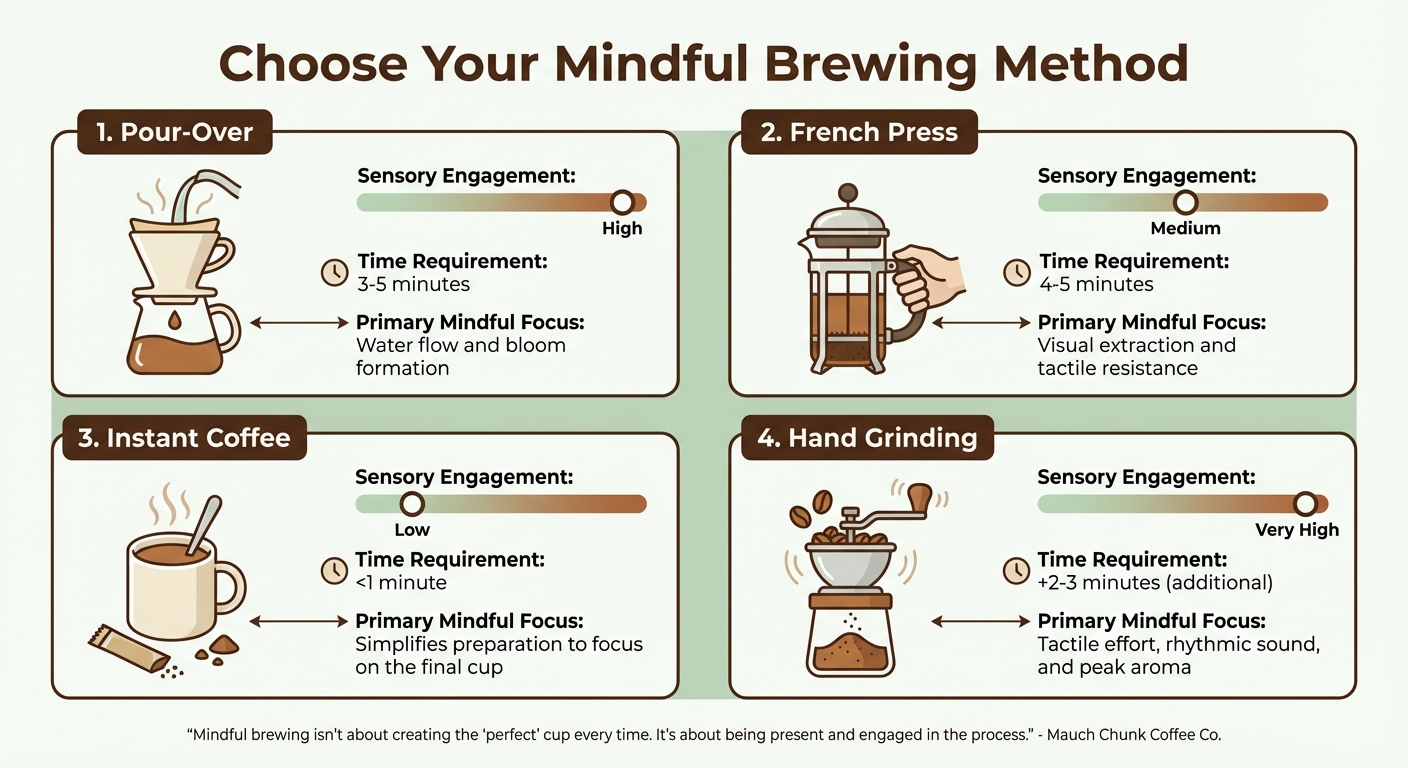
Mindful Coffee Brewing Methods Comparison Guide
Turning coffee preparation into a mindful practice can transform a simple routine into a moment of calm and reflection. It's not just about the drink - it’s about the experience, from start to finish.
Creating the Right Environment
Your brewing space plays a big role in setting the tone. Find a quiet corner in your home and make it your "Mindful Brewing Zone." Keep distractions at bay - turn off your phone, silence notifications, and minimize clutter. Opt for soft or natural lighting, maintain a neutral room temperature, and avoid overpowering scents. Preparing your tools and picking your favorite mug the night before can help streamline the ritual. Before you begin, take a moment to ground yourself. Close your eyes and take three deep breaths to relax. As Bruvi explains:
"Mindfulness is the practice of being fully present and engaged in the moment, aware of your thoughts and feelings without distraction or judgment."
Engaging Your Senses During Brewing
Brewing coffee is a sensory experience that invites you to slow down and appreciate the moment. Start by noticing the texture of the beans in your hand. If you use a manual grinder, let the effort guide your focus. Listen to the rhythmic grinding and take in the aroma of freshly ground coffee. As hot water meets the grounds, observe the "bloom" as it swells and bubbles - it’s a perfect cue to pause and appreciate the transformation. Inhale deeply to detect subtle notes like chocolate, fruit, or floral hints. Research shows that the smell of freshly brewed coffee can boost mood and mental clarity. Pay attention to the sounds of your brewing method, whether it’s the drip of a filter, the bubbling of a moka pot, or the hum of an espresso machine. Feel the warmth of the steam or the mug in your hands - each sensation is an opportunity to stay present.
Fully immersing yourself in the brewing process can help you discover which method resonates most with your preferences.
Choosing Your Brewing Method
Each brewing method offers a different sensory experience. Pour-over brewing requires focus as you measure the grounds and pour water in slow, circular motions, encouraging complete engagement. The French press provides a tactile element as you press the plunger and watch the coffee transform. For those who prefer simplicity, instant coffee allows you to concentrate on enjoying the final cup. As Mauch Chunk Coffee Co. puts it:
"Mindful brewing isn't about creating the 'perfect' cup every time. It's about being present and engaged in the process."
Here’s a quick comparison of brewing methods to help you find the one that suits your mindful coffee ritual:
| Brewing Method | Sensory Engagement | Time Requirement | Primary Mindful Focus |
|---|---|---|---|
| Pour-over | High | 3–5 minutes | Water flow and bloom formation |
| French Press | Medium | 4–5 minutes | Visual extraction and tactile resistance |
| Instant Coffee | Low | <1 minute | Simplifies preparation to focus on the final cup |
| Hand Grinding | Very High | +2–3 minutes | Tactile effort, rhythmic sound, and peak aroma |
As your coffee brews or cools, take a moment to set an intention for the day. Whether it’s patience, curiosity, or resilience, this small act can give your morning routine deeper meaning and help you carry that energy throughout the day.
Once you've mastered mindful brewing, you can explore ways to enhance your ritual with thoughtful ingredients and add-ins.
Ingredients and Add-Ins for Mindful Coffee
Once you've mastered mindful brewing, the next step is choosing ingredients that align with your wellness goals. By incorporating functional ingredients, you can transform your coffee into a ritual that supports overall health. The growing popularity of functional coffee, now part of a $4.5 billion market, highlights the demand for beverages that do more than just provide energy. Dr. Taz, a board-certified integrative medicine physician, shares:
"If you add the right ingredients, you can prime digestion, deliver energy to your cells, and support healthy metabolism and hormone levels".
Functional Ingredients for Wellness
MCT oil and coconut oil are rich in medium-chain triglycerides, which your body uses for quick energy instead of storing as fat [22,24]. Adding just 1/2 tablespoon to your coffee can give your metabolism a helpful boost.
Cinnamon is another great addition, known for helping regulate blood sugar and enhancing fat metabolism. Just 1/4 teaspoon of Ceylon cinnamon can prevent the energy dips often associated with coffee. For an extra kick, ingredients like ginger and cayenne can stimulate thermogenesis and curb appetite, making them ideal pre-workout add-ins [24,25]. Drinking coffee 30–60 minutes before exercise has also been shown to improve endurance and fat oxidation.
Medicinal mushrooms are gaining traction, with Lion's Mane supplements seeing a staggering 1,300% growth as of April 2025. Lion's Mane supports mental clarity and focus, while Cordyceps is linked to better stamina and athletic performance. These adaptogens can also help manage stress by reducing cortisol levels. Pairing coffee with L-theanine, an amino acid, promotes relaxation and mental clarity while balancing caffeine's stimulating effects [23,26].
Collagen peptides offer a range of benefits, from improving skin and joint health to supporting metabolism. Meanwhile, probiotics can encourage a healthy gut microbiome and strengthen your immune system. To maintain sleep quality and aid weight management, it's best to avoid caffeine after 2:00 p.m..
Lean Joe Bean Coffee Blends

For those looking for convenience, Lean Joe Bean offers instant coffee blends that combine functional ingredients with ease of use [26,29]. Their Superfood Coffee stands out, featuring 15 natural superfoods and 14 essential vitamins and minerals, including MCT, turmeric, cinnamon, ginger, green tea, L-theanine, Cordyceps, Lion's Mane, Siberian ginseng, collagen protein, HSO probiotic, Chaga, Shiitake, and Maitake. With a 4.9/5.0 rating from 43 reviews, customers frequently praise its smooth dark roast flavor and the focus it provides without the usual caffeine crash.
The Weight Loss Coffee blend is specially designed with green tea, ginger, and medicinal mushrooms to help curb cravings, boost metabolism, and support weight goals [26,31]. Both blends are keto-friendly, non-GMO, and ideal for intermittent fasting since they don't disrupt fasting windows [26,29]. Priced at $36.95 per box (24 single-serving packets), these blends simplify your routine by eliminating the need for multiple supplements. With over 200,000 servings sold, Lean Joe Bean products are 3rd-party tested, Tru-ID certified, and manufactured in GMP-compliant facilities in the USA [26,29].
Building a Mindful Coffee Routine
Timing your coffee and pairing it with supportive habits can improve weight management, mental focus, and sleep quality. Let’s dive into the best times to drink coffee, how to combine it with healthy routines, and tips for managing caffeine.
When to Drink Coffee
When you drink coffee can make a surprising difference. Experts recommend waiting 90 minutes to two hours after waking to let your body’s natural cortisol levels rise and fall. Julia Zumpano, a Registered Dietitian at the Cleveland Clinic Center for Human Nutrition, shares:
"Ideally, if you could wait one to two hours [after you wake up] and after cortisol levels rise and start to come back down, that would be the best time to have coffee".
The mid-morning window, typically between 9:30 AM and 11:30 AM, is ideal for improving focus without overstimulating your stress response.
If weight loss is your goal, have coffee 30–60 minutes before working out. Caffeine not only enhances fat burning during exercise by up to 29% compared to a placebo but also helps you burn an extra 80–150 calories daily. For an energy boost after lunch, an early afternoon coffee (12:00 PM–3:00 PM) can help fight off sluggishness. Just make sure to cut off caffeine at least six hours before bedtime to avoid disrupting your sleep.
Combining Coffee with Healthy Habits
Pair your coffee with hydration, protein, and mindfulness to create a wellness-boosting routine. Start your day with a glass of water - adding lemon if you like - to ensure you’re hydrated before your first sip of coffee. Take a moment to enjoy the experience of your coffee: the aroma, the warmth of the mug, and the flavors. Sarah Thompson from Ahead explains:
"This isn't about adding another task to your morning routine; it's about turning something you already do into a powerful mindfulness practice".
For breakfast, combine your coffee with protein-rich options like Greek yogurt, boiled eggs, or a smoothie to stabilize your blood sugar and avoid a caffeine crash. While your coffee brews, take a few minutes to set daily intentions - whether that’s journaling, practicing gratitude, or focusing on one quality you want to embody. Pick a consistent, peaceful spot, like a sunny corner or a quiet balcony, to signal your brain it’s time for mindful reflection.
Managing Caffeine for Better Sleep
Keeping caffeine in check is key to maintaining the benefits of your mindful coffee routine. Stick to a daily limit of 400 mg (about 3–5 cups), and experiment with the smallest amount that still gives you the energy boost you need. This can prevent over-reliance and side effects like jitters.
Caffeine also temporarily boosts your resting metabolic rate by 3–4% for up to three hours after consuming 100 mg. To stay hydrated, drink a glass of water with every cup of coffee, and consider taking a 2–3 day break from caffeine every so often to reset your tolerance. In the late afternoon, switch to decaf, half-caf, or herbal tea to keep your coffee ritual intact without interfering with sleep. Overdoing caffeine can delay REM sleep and reduce deep, restorative sleep, so respecting the six-hour cutoff is essential.
Conclusion
Mindfully sipping your coffee can turn an everyday habit into a calming wellness ritual. By focusing on the warmth of the cup, the rich aroma, and the complex flavors, you invite yourself into the present moment. This small act of mindfulness trains your brain to slow down, transforming your morning coffee into a mini-meditation that can help reduce stress, sharpen focus, and heighten emotional awareness.
What makes this practice so appealing is its simplicity. You’re not adding an extra task to your already packed schedule - you’re simply shifting your attention to something you’re already doing. By gently bringing your focus back to your coffee whenever your mind drifts, you unlock benefits that ripple beyond that single moment.
This consistent practice can even impact your brain on a deeper level. Strengthening neural pathways tied to emotional regulation can help you approach everyday challenges with greater calm and clarity. And mindfulness doesn’t just stop at mental health - it’s been shown to support physical well-being too, such as lowering blood pressure and reducing inflammation. Pairing this with thoughtful habits, like timing your coffee mid-morning when cortisol levels dip, can create a routine that nurtures both mind and body.
Your coffee time can become more than just a caffeine fix. It can be a moment of gratitude, a bridge between rest and action, or a chance to reflect on the journey from bean to cup. By staying within the recommended 400 mg of caffeine per day and steering clear of late-day coffee, you can enjoy the focused energy that makes this ritual so rewarding. With a little intention, your daily coffee can become a cornerstone of a healthier, more mindful life.
FAQs
How can I practice mindful coffee drinking when I’m short on time?
To enjoy mindful coffee drinking even on a busy schedule, try incorporating simple mindfulness techniques. Pause for a deep breath and let yourself fully experience the coffee - its aroma, warmth, and flavor. You can also take a second to reflect on something you're grateful for or set a positive intention for the day. These small, deliberate moments help ground you in the present without taking up much time.
What’s the best way to find my ideal caffeine amount without overdoing it?
To figure out how much caffeine works best for you, start with the general recommendation: up to 4 cups of coffee per day (around 400 mg of caffeine). This amount is considered safe for most adults. Pay attention to how your body responds - if you notice symptoms like jitters, anxiety, or trouble sleeping, it’s a sign to cut back. Also, steer clear of caffeine later in the day to avoid disrupting your sleep. The key is to listen to your body and adjust accordingly.
Which add-ins are best for my goal (focus, stress, or weight management)?
The perfect coffee add-ins depend on what you're aiming to achieve. If you're looking to improve focus and manage stress, consider adding adaptogenic herbs like ashwagandha. These herbs are often associated with promoting mental clarity and a sense of calm.
For those focusing on weight management, keeping things simple with plain black coffee is a great choice. You can also enhance the flavor with spices like cinnamon or cardamom. These spices not only add a warm, aromatic touch but also avoid adding extra calories, making them a smart option for health-conscious coffee lovers.
By tailoring your coffee to your goals, you can enjoy a cup that supports both your taste buds and your wellness journey.
Related Blog Posts
- 6 Simple Ways to Add Adaptogens to Your Morning Routine
- Functional Coffee and Meal Prep: Weight Loss Guide
- How Dark Roast Coffee Improves Focus
- How Functional Coffee Combines Probiotics and Gut Health
Related reading
- Start Your Day Right: The Health Benefits of Drinking Cinnamon Coffee
- How To Make The Best Coffee Drink For Weight Loss - Without the Sugar and Fat
- Metabolism Boosting Coffee Planner
Ready to put this into practice? Explore Lean Joe Bean Weight Loss Coffee and Superfood Mushroom Coffee.
