
Why Timing Functional Coffee Matters for Weight Loss
by Joanna Foley
·
Functional coffee can help with weight loss by boosting metabolism, controlling appetite, and improving workout performance. But when you drink it is just as crucial as what’s in it. Here’s what you need to know:
- Metabolism Boost: Coffee increases metabolism by 5%–20% for up to 3 hours. Drinking it 3–4 hours before moderate exercise can enhance fat burning by 29%.
- Appetite Control: Drinking coffee 30 minutes to 4 hours before a meal reduces calorie intake by increasing fullness hormones like PYY.
- Workout Performance: Consuming coffee 45–60 minutes before exercise improves strength and fat oxidation.
- Morning Routine: Wait 1 hour after waking to avoid interfering with cortisol levels and maximize metabolic benefits.
- Avoid Sleep Disruption: Stop caffeine intake by 2:00 p.m. to ensure quality sleep, which is essential for weight management.
Strategic timing enhances coffee’s fat-burning and appetite-suppressing effects without overdoing caffeine. Stick to black coffee or functional blends with minimal additives for the best results.
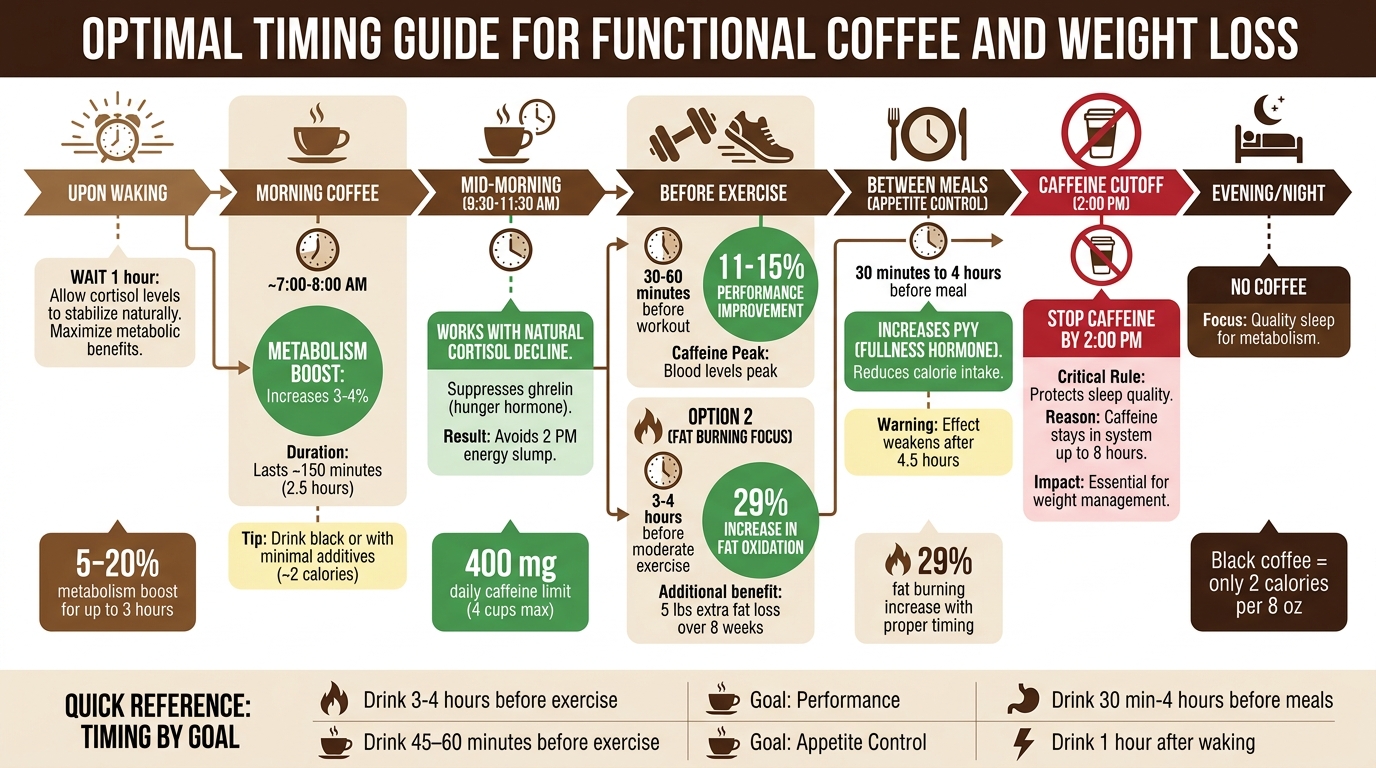
Optimal Timing Guide for Functional Coffee and Weight Loss
When to Drink Coffee for Weight Loss
sbb-itb-c7947de
How Timing Affects Functional Coffee's Impact on Your Body
Your body doesn’t absorb the ingredients in functional coffee the moment you take a sip. There’s a process involved, and understanding how this timeline works can help you get the most out of its benefits - whether it’s boosting fat burning, increasing energy, or managing hunger.
Let’s dive into how timing plays a role in these effects and why it matters for your weight-loss goals.
How Functional Coffee Increases Your Metabolism
Caffeine is a well-known metabolism booster. It works by stimulating your central nervous system and triggering thermogenesis - the process where your body generates heat and burns calories. For instance, an 8-ounce cup with 100 mg of caffeine can raise your metabolic rate by 3% to 4% for about 150 minutes.
Here’s what’s happening under the hood: caffeine inhibits an enzyme called phosphodiesterase, which increases cAMP levels in your body. This, in turn, triggers lipolysis (the breakdown of fat) within 2 to 3 hours.
Timing also plays a huge role in maximizing these effects. Drinking functional coffee 3 to 4 hours before moderate-intensity exercise can boost fat oxidation by as much as 29%. Functional coffee blends, like those from Lean Joe Bean, often include ingredients like green tea extract and MCT oil to amplify these effects. These ingredients work together, activating multiple pathways to enhance your metabolism.
This metabolic boost doesn’t just help you burn calories - it also sets the stage for better appetite control.
How Timing Controls Hunger
Functional coffee isn’t just about burning fat; it also helps manage hunger when consumed strategically. Studies show that drinking coffee 30 minutes to 4 hours before a meal can reduce how much you eat. However, waiting longer than 4.5 hours tends to weaken this effect.
Why does this happen? It’s all about hormones. Coffee increases levels of Peptide YY (PYY), a hormone that makes you feel full. Many functional coffee blends also include MCT oil, which is quickly metabolized for energy while enhancing feelings of satiety.
Timing your coffee intake can also influence cortisol levels. Drinking functional coffee between 9:30 and 11:30 a.m. works with your body’s natural cortisol rhythm. Cortisol tends to decline during this window, and consuming coffee at this time may help suppress ghrelin (the hunger hormone) without triggering a stress response that could lead to fat storage. Plus, this timing can help you avoid the dreaded 2 p.m. energy slump and associated cravings.
If you’re pairing coffee with a meal, give your body an extra 30–45 minutes to absorb the caffeine and let it take full effect.
Best Times to Drink Functional Coffee for Weight Loss
Understanding how timing impacts metabolism and appetite can help you make the most of functional coffee to support your weight-loss goals.
Before Exercise: Boost Fat Burning and Performance
Drinking functional coffee 30–60 minutes before your workout can improve athletic performance by 11–15%, as this is when caffeine levels peak in your bloodstream. If your goal is to burn fat, consuming it 3–4 hours before moderate-intensity exercise can increase fat oxidation by up to 29%.
"Sipping coffee about 30-60 minutes before exercise can increase endurance and performance... caffeine can increase fat oxidation, allowing your body to tap into fat stores for energy." - Noom Editorial Team
This timing strategy not only enhances workout performance but also helps your body utilize fat as an energy source more effectively.
First Thing in the Morning: Jumpstart Your Metabolism
Although reaching for coffee right after waking is common, waiting about an hour may be more effective. Drinking coffee during peak cortisol levels can reduce its metabolic benefits. Allowing cortisol to naturally decline first can amplify caffeine's impact, with 100 mg of caffeine increasing your metabolic rate by 3% to 4% for about 150 minutes.
Functional coffee blends, like those from Lean Joe Bean, include metabolism-boosting ingredients such as green tea extract and MCT oil. For best results, stick to black coffee or keep additions minimal - an 8-ounce cup of black coffee contains just around two calories.
Between Meals: Manage Cravings
After your workout or morning coffee, another strategic time to drink functional coffee is between meals. This can help combat the afternoon energy dip that often leads to unhealthy snacking. Consuming coffee 30 minutes to 4 hours before your next meal may help curb hunger and reduce calorie intake. However, waiting longer than 4.5 hours before eating may lessen this appetite-suppressing effect.
"Drinking coffee shortly before a meal may decrease the amount you eat at that meal." - Healthline
Coffee also stimulates the production of PYY, a hormone that promotes feelings of fullness. Even decaf coffee can provide this benefit, making it a good option for those sensitive to caffeine. To ensure quality sleep - essential for weight management - set a caffeine cut-off time around 2:00 p.m.
Common Timing Mistakes That Hurt Weight Loss
Even the best functional coffee can lose its edge if you drink it at the wrong times. These timing missteps can reduce its effectiveness in boosting metabolism, burning fat, and enhancing workout performance. Here’s how to avoid them.
Drinking Coffee Too Late in the Day
Enjoying coffee in the afternoon or evening might feel like a harmless pick-me-up, but it can seriously disrupt your sleep. Since caffeine can linger in your system for up to eight hours, that late-afternoon cup could still be active when you’re trying to fall asleep at midnight.
"It could be hitting you in the middle of the night. You just don't know." - Julia Zumpano, Registered Dietitian, Cleveland Clinic Center for Human Nutrition
Poor sleep doesn’t just leave you groggy; it also messes with your metabolism, making weight management tougher. Over time, lack of quality sleep caused by too much caffeine can even lead to weight regain. To protect your sleep - and your weight loss goals - cut off caffeine intake by 2:00–3:00 p.m..
Excessive Coffee Consumption
Yes, functional coffee can kick your metabolism into gear, but too much of it can backfire. The safe daily limit for caffeine is about 400 mg, or roughly four 8-ounce cups of coffee. Going over this limit can lead to unpleasant side effects like jitters, anxiety, frequent bathroom trips, and stomach irritation.
There’s also the issue of tolerance. Drinking large amounts of coffee regularly can desensitize your adenosine receptors, which means you’ll need more caffeine to feel the same effects. This can diminish the fat-burning and appetite-suppressing benefits you’re aiming for. To avoid this, try taking "caffeine reset days" once or twice a week to keep your body responsive.
Drinking Coffee Right Before Eating
Sipping coffee right before a meal might sound convenient, but it can interfere with digestion and slow down how your body absorbs carbohydrates. It can also trigger acid reflux or stomach discomfort, especially if you’re drinking multiple cups throughout the day.
To get the most out of functional coffee’s metabolism-boosting properties without upsetting your stomach, it’s best to avoid drinking it immediately before meals. Timing matters, and knowing when to enjoy your coffee can make all the difference. Up next, we’ll dive into how the ingredients in functional coffee work best when consumed at the right moments.
How Functional Coffee Ingredients Work Best at Different Times
Timing plays a big role in how functional coffee ingredients can help with weight loss and workout performance. Knowing when to consume each component can make a noticeable difference in achieving your goals. Here's how the timing of specific ingredients can work to your advantage.
Caffeine and green coffee beans are known to kickstart fat oxidation, with their effects peaking about 2–3 hours after consumption. Research suggests that taking 200–300 mg of caffeine on an empty stomach and waiting 3–4 hours before exercising can boost fat oxidation by as much as 29%. Over an 8-week period, this approach may lead to around 5 lbs of additional fat loss.
Other ingredients, like green tea extract and ginseng, also benefit from strategic timing. For those focusing on fat loss, drinking your morning coffee with these ingredients and waiting 3–4 hours before a workout allows their metabolic effects to fully develop. If you're prioritizing athletic performance and power, consuming coffee 45–60 minutes before exercise lets caffeine hit its peak while reducing the risk of jitters. For endurance activities, consider splitting your dose: take half an hour before and the other half 30 minutes before starting. This method helps sustain energy throughout longer sessions.
It's also important to consider the effect of meals on ingredient absorption. High-fat meals can delay caffeine absorption by up to 60 minutes, while high-fiber meals may reduce it by 15–25%. To adjust, add an extra 30–45 minutes after eating before drinking your coffee. Additionally, drinking 16–20 oz of water about 30 minutes beforehand helps optimize caffeine absorption, as caffeine has mild diuretic properties.
For convenience, products like Lean Joe Bean's Weight Loss Coffee combine ingredients like green coffee beans, green tea extract, and ginseng into single-serving packets. This simplifies the timing process, making it easier to align your coffee consumption with your weight loss or performance goals. Whether you're aiming to shed fat or boost your workout output, timing your coffee intake properly can make all the difference.
Conclusion
The timing of your functional coffee intake can play a big role in maximizing its benefits. Whether you're looking to boost fat burning, manage cravings, or improve your workout performance, syncing your coffee consumption with your body's natural rhythms is key.
Research shows that caffeine's effects on metabolism can last for hours. For instance, delaying your first cup of coffee by about an hour after waking allows your cortisol levels to stabilize, which can improve its effectiveness. Drinking coffee 30 to 60 minutes before a workout can enhance fat burning and performance, while having it between meals may help curb appetite and reduce unnecessary snacking. The trick lies in maintaining a consistent routine and setting smart caffeine cutoffs.
Stopping caffeine intake by 2:00 p.m. can protect your sleep quality, which is essential for weight management. Opting for black coffee or keeping additives minimal ensures you’re not turning a low-calorie boost into a calorie-heavy treat.
For added convenience, products like Lean Joe Bean's Weight Loss Coffee offer pre-portioned options with premium ingredients, making it easier to stick to your ideal coffee schedule.
FAQs
How much caffeine is too much for weight loss?
Consuming more than 300 mg of caffeine per day is typically seen as overdoing it when it comes to weight loss. Excessive caffeine intake can lead to unpleasant side effects and may actually diminish its usefulness in supporting weight management. The key here is moderation - finding the right balance helps you enjoy its benefits without the downsides.
Should I drink functional coffee with food or on an empty stomach?
Drinking functional coffee on an empty stomach is often suggested because it allows caffeine to be absorbed more quickly. This can provide an energy boost and improve workout performance, which may align with weight loss goals. That said, everyone's body reacts differently, so personal tolerance and preferences should guide your choice.
What if I work out in the evening - when should I drink it?
If you prefer evening workouts, steer clear of drinking functional coffee within six hours of your session. This timing helps you avoid potential sleep disruptions while still ensuring you perform at your best. To get the most out of functional coffee, enjoy it earlier in the day or at least six hours before your workout.
Related Blog Posts
- Turmeric Coffee: Weight Loss Benefits Explained
- Functional Coffee and Meal Prep: Weight Loss Guide
- Checklist for Choosing Coffee Blends for Weight Loss
- How Coffee Boosts Fat Burning Before Workouts
Related reading
- Ryze Coffee Benefits: Weight Loss & Energy
- How Turmeric Coffee Enhances Cognitive Function: A Closer Look at Curcumin’s Brain-Boosting Benefits
- Ultimate Guide to MCT Oil for Sustained Energy
- How to Stay Energized All Day Without Sugar Crashes
- Thermogenic Coffee: What the Science Actually Says
Ready to put this into practice? Explore Lean Joe Bean Weight Loss Coffee and Superfood Mushroom Coffee.
