
Probiotic Coffee for Weight Loss and Gut Health
by Joanna Foley
·
Probiotic coffee is a drink that combines coffee with live bacteria that support digestion, metabolism, and gut health. It’s designed to offer the energy boost of coffee with added health benefits. Here's what you need to know:
- What it is: Coffee infused with heat-resistant probiotics like Bacillus coagulans, which survive brewing temperatures.
- How it works: Coffee's natural fiber and polyphenols act as prebiotics, feeding these probiotics to balance gut bacteria.
- Weight loss benefits: Probiotics influence fat storage, appetite regulation, and metabolism, while coffee boosts calorie burn by 80–150 calories daily.
- Gut health perks: Coffee and probiotics together improve digestion, reduce bloating, and promote regular bowel movements.
- Convenience: Brands like Lean Joe Bean offer instant probiotic coffee, making it easy to include in your routine.
While probiotic coffee can support weight management and gut health, it works best alongside a balanced diet and exercise. Regular use may lead to modest improvements in digestion and weight over time.
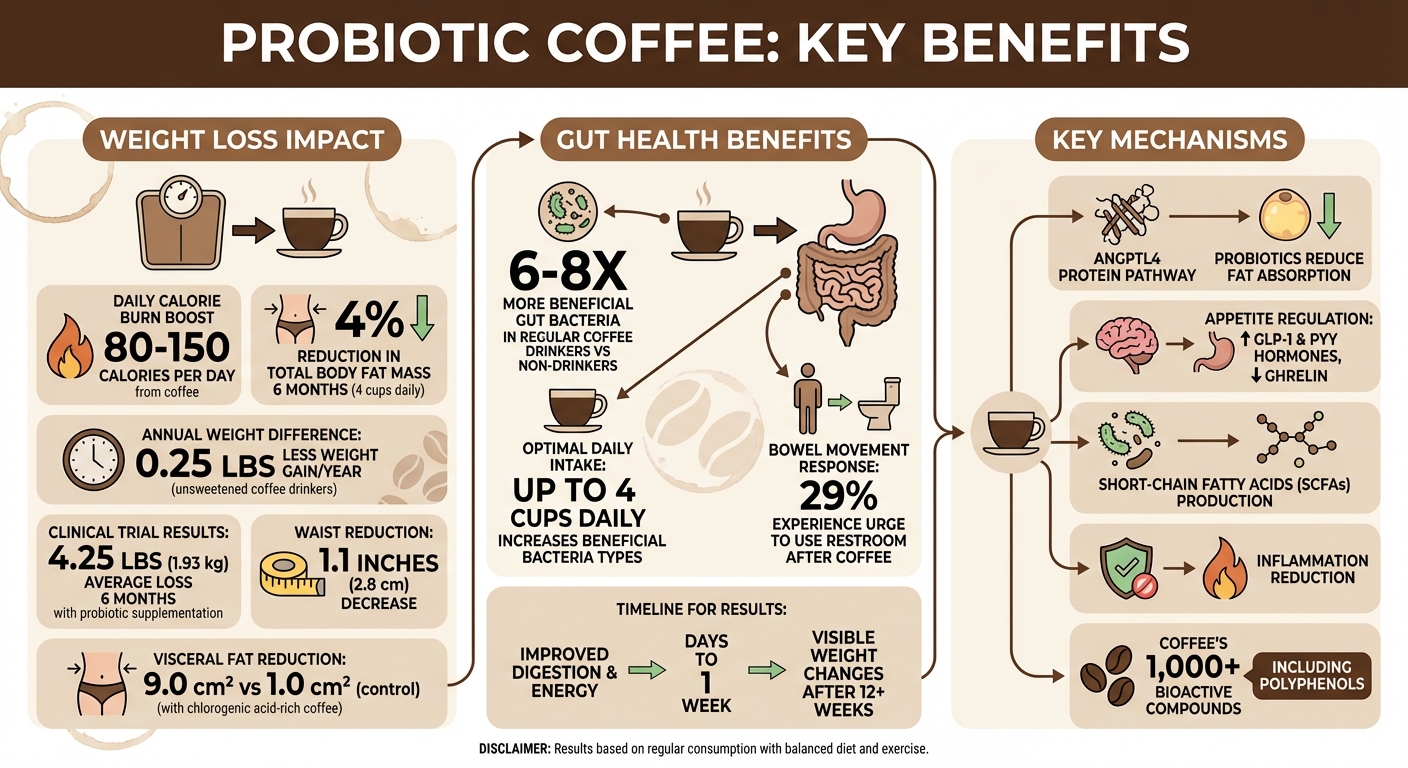
Probiotic Coffee Benefits: Weight Loss and Gut Health Statistics
How Probiotics Support Weight Loss
Probiotics influence weight management through a variety of biological processes. These friendly bacteria can affect how your body digests food, stores fat, and regulates hunger signals. This might explain why incorporating probiotics into your morning coffee could help with your weight goals.
How Probiotics Work for Weight Control
Probiotics tackle weight gain through several interconnected mechanisms. They can reduce fat absorption by increasing the expression of ANGPTL4 (Fasting-Induced Adipose Factor). This protein inhibits lipoprotein lipase (LPL), which prevents the breakdown of triglycerides into fatty acids for fat storage. Additionally, probiotics influence appetite regulation by boosting satiety hormones like GLP-1 and PYY while lowering levels of the hunger hormone ghrelin.
Frank Hu, Chair of the Department of Nutrition at Harvard T.H. Chan School of Public Health, explained, "After drinking coffee, participants had higher levels of serotonin, a brain chemical that, among other things, can suppress appetite, and lower levels of the hunger-inducing hormone ghrelin."
Probiotics also play a role in producing short-chain fatty acids (SCFAs) during fiber fermentation. These SCFAs promote fat oxidation, increase energy expenditure, and enhance feelings of fullness. Moreover, probiotics help reduce inflammation by lowering markers like lipopolysaccharides and TNF-α, which can improve insulin sensitivity and curb excess fat storage.
These biological effects are supported by clinical research, as outlined below.
Research on Probiotics and Weight Loss
Scientific studies back up these weight loss mechanisms. For instance, a meta-analysis of eight randomized controlled trials involving 412 participants found that probiotics significantly boosted weight loss and reduced visceral fat, with results showing strong statistical significance (P < 0.00001).
A study conducted at the Karolinska Institutet in Sweden from October 2021 to February 2022 evaluated a probiotic compound called AB001, which included Bacillus subtilis and Bacillus coagulans strains. In this double-blind trial, 81 participants with BMIs between 26 and 30 took part. Those who increased their dose to six capsules daily lost an average of 4.25 lbs (1.93 kg) over six months and reduced their waist circumference by about 1.1 inches (2.8 cm). The findings showed that higher doses of these probiotics were safe and more effective.
Different probiotic strains target various aspects of weight management. For example, Lactobacillus gasseri and Lactobacillus rhamnosus are closely associated with fat oxidation and weight loss, while Bifidobacterium breve B-3 improves lipid metabolism and insulin sensitivity. In a 12-week trial, overweight adults consuming coffee rich in chlorogenic acids (369 mg) saw a visceral fat area reduction of 9.0 cm² compared to just 1.0 cm² in the control group. These effects seem most effective when probiotics are taken consistently for at least 12 weeks.
sbb-itb-c7947de
Gut Health Benefits of Probiotic Coffee
Probiotic coffee combines the gut-friendly properties of coffee with the added benefits of live probiotics, creating a powerful duo for digestive health. Interestingly, studies reveal that regular coffee drinkers can have six to eight times more beneficial gut bacteria compared to non-coffee drinkers. Let’s dive into how this synergy works to support a balanced gut.
Balancing Gut Bacteria
Coffee is naturally rich in polyphenols and soluble fibers, which act as prebiotics - essentially food for beneficial bacteria. When paired with live probiotics, this combination creates an environment where these good bacteria can thrive. Research indicates that drinking up to four cups of coffee daily can increase the abundance of beneficial bacteria types, such as Firmicutes and Actinobacteria.
One study found that consuming three cups of coffee per day over three weeks significantly boosted levels of Bifidobacterium species. These bacteria are key players in maintaining a strong gut barrier and enhancing nutrient absorption. Additionally, coffee may inhibit harmful bacteria like E. coli and Enterobacteriaceae, further promoting a healthy bacterial balance. This harmonious environment paves the way for improved digestion, as explained below.
Relieving Digestive Problems
Probiotic coffee can also help alleviate common digestive issues. Coffee naturally stimulates the production of gastrin, gastric acid, and pancreatic enzymes, all of which are essential for efficient food breakdown. This can reduce bloating and indigestion, especially after meals.
For those struggling with constipation, coffee’s benefits are particularly noteworthy. It enhances colon motility, encouraging regular bowel movements. In fact, nearly 29% of healthy individuals report feeling the urge to use the restroom shortly after drinking coffee. Probiotics further support this process by promoting the production of beneficial fatty acids and reducing inflammation, which can aid overall digestion.
"The current literature suggests that moderate coffee consumption has beneficial effects on oral and gut microbiota and motility function", said Sena Saygili, MD, from the University of Texas Medical Branch.
Probiotic Coffee as a Functional Drink
Probiotic coffee blends seamlessly into your morning ritual, offering an effortless way to ensure the daily probiotic intake your body needs. Unsurprisingly, this market is steadily gaining traction.
Easy to Use and Prepare
Probiotic coffee is incredibly straightforward to prepare. Forget about refrigeration or specialized gear. Brands like Lean Joe Bean have made it even simpler with single-serving packets that mix easily with hot or cold water. This convenience removes the hurdles often associated with traditional probiotic sources like yogurt, which may require refrigeration and aren't always suitable for all diets.
Most probiotic coffee options use heat-resistant Bacillus spores, which stay intact even when exposed to high brewing temperatures. These spores remain dormant until they reach your gut, where they activate to support digestion. This means you can brew your coffee however you like - whether it's a drip coffee maker, K-cups, or even cold brew - without compromising the probiotics' effectiveness.
Combined Health Benefits
The simplicity of probiotic coffee makes it easy to incorporate into your daily routine, supporting goals like better digestion and weight management. It combines coffee's natural properties with probiotics for added benefits. Coffee itself contains over 1,000 bioactive compounds, including polyphenols like chlorogenic acid, which act as prebiotics by nourishing helpful gut bacteria. When probiotics are added, they can amplify the activity of these compounds, potentially boosting the drink's overall health benefits.
"As a commodity with regular consumption patterns, coffee is thus an ideal base for probiotics that require daily supplementation".
What to Expect from Probiotic Coffee
Benefits You Can Expect
Probiotic coffee offers some health perks when consumed regularly. For example, a study found that drinking four cups daily led to a 4% reduction in total body fat mass over six months. Additionally, unsweetened coffee drinkers tend to gain about 0.25 pounds less annually compared to those who don’t drink coffee at all.
Beyond weight management, probiotic coffee can improve digestion and reduce inflammation. Probiotics like Lactobacillus and Bifidobacterium help restore balance in your gut by replacing harmful bacteria with beneficial ones. Many people notice better digestion and increased energy within a few days to a week. However, visible weight changes usually take at least 12 weeks of consistent use. If you experience mild side effects, they typically fade as your gut adjusts.
While these benefits sound promising, it’s important to keep realistic expectations.
Understanding the Limits
Probiotic coffee can support your health goals, but the improvements are generally modest. As Frank Hu, Chair of the Department of Nutrition at Harvard T.H. Chan School of Public Health, points out:
"You're still gaining weight; it's just slightly less compared to the general population".
To maximize the benefits, pair probiotic coffee with a low-calorie diet and regular exercise. Gail Cresci, PhD, RD, LD from Cleveland Clinic, explains:
"It's possible that probiotics lay the groundwork for successful weight loss by improving your body's ability to function".
Keep in mind that adding high-calorie creamers or sugars can cancel out its metabolic advantages. Also, stick to the recommended caffeine limit of 400 mg per day to avoid side effects like anxiety or sleep issues. Staying hydrated is crucial too, as coffee acts as a diuretic.
Lean Joe Bean: A Probiotic Coffee Option

What Lean Joe Bean Offers
Lean Joe Bean stands out by combining convenience with health-focused benefits. This brand offers dark roast Arabica instant coffee infused with metabolism-boosting supplements and probiotics, with over 200,000 servings sold to date.
Their Superfood Coffee is packed with HSO Probiotics, 15 superfoods, and 14 essential vitamins and minerals. It features a six-mushroom complex - Cordyceps, Lion's Mane, Chaga, Shiitake, Maitake, and Reishi - designed to enhance immunity and mental clarity. Additionally, MCT oil and collagen are included to support gut health.
For those focused on weight management, the Weight Loss Coffee is tailored to curb appetite and boost metabolism. Key ingredients include Garcinia Cambogia (95% concentration), Green Coffee Bean, L-Carnitine, and Chromax, a patented and highly bioavailable form of chromium picolinate. Both blends utilize clinically tested, patented ingredients and undergo third-party testing, earning Tru-ID Certification for authenticity.
Nutrition writer Scot Mills describes it as: "Lean Joe Bean is the world's first functional weight-loss coffee. It's made with a propriety blend of dark roast coffee beans, minerals, plant compounds, and amino acids formulated to turn your morning cup of Joe into fat-burning rocket fuel".
Products and Pricing
Lean Joe Bean offers its coffee blends in boxes of 24 single-serving packets, catering to both convenience and quality. The Weight Loss Coffee boasts a 4.6/5.0 rating from 210 reviews, while the Superfood Coffee shines with a 4.9/5.0 rating based on 43 reviews.
Pricing starts at $36.95 per box. For added savings, a "Subscribe and Save" option is available on their website, offering a 20% discount on recurring orders. Customers can also use Affirm to split their payments into two interest-free installments of $18.48 every 15 days.
Customer Crystal Owens shared: "This gives me energy and takes away my appetite better than the prescription meds I've tried".
While many customers praise the energy boost and appetite-suppressing effects, some have noted that the price is higher than regular coffee. Additionally, the herbal ingredients create a distinct flavor that may differ from traditional brews.
Conclusion
Probiotic coffee brings a blend of weight management and gut health benefits to your morning routine. Caffeine, known for its metabolic boost, can help you burn an extra 80 to 150 calories daily. When paired with live probiotics, which support digestion and reduce inflammation, your coffee becomes more than just a pick-me-up - it’s a functional beverage with dual advantages. Plus, coffee's polyphenols act as prebiotics, nourishing the beneficial bacteria in your gut.
The best part? It’s easy to incorporate into your day. Unlike supplements that require new habits, probiotic coffee fits right into your existing routine. Options like Lean Joe Bean make it even simpler with instant preparation for hot or iced coffee, making it easier to stay consistent.
That said, keep expectations grounded. While studies suggest regular coffee consumption could lead to a 4% reduction in body fat over six months, probiotic coffee works best as part of an overall healthy lifestyle. For the best results, enjoy it in the morning and remember to stay hydrated throughout the day, as coffee can have diuretic effects.
With probiotic coffee, your daily cup becomes more than just a caffeine fix - it turns into a tool for metabolism, appetite control, and digestive health, all without requiring any major changes to your routine.
FAQs
Who should avoid probiotic coffee?
Individuals with sensitive digestive systems, such as those with IBS or frequent gastrointestinal discomfort, should be cautious with probiotic coffee. Unless it's specifically designed for sensitive stomachs - like low-FODMAP varieties - regular probiotic coffee might lead to digestive upset.
How long does it take to see results?
You can usually start noticing results from probiotic coffee within a few weeks. However, the timeline can vary based on individual factors like your body’s unique response. Staying consistent with consumption and maintaining a healthy lifestyle can also play a role in how quickly you experience the benefits.
What should I look for on the label?
When selecting supplements or products, keep an eye out for ingredients such as probiotics, green coffee bean extract, green tea extract, ginseng, MCT oil, and other plant-based compounds. These ingredients can play a role in supporting weight management and improving gut health. Opting for a mix with premium-quality components may also help boost digestion and contribute to overall well-being.
Related Blog Posts
- Ultimate Guide to Mindful Coffee Drinking
- Turmeric Coffee: Weight Loss Benefits Explained
- How Dark Roast Coffee Improves Focus
- Instant Coffee for Weight Loss: Save Time, Stay Healthy
Related reading
- Probiotic Coffee for Weight Loss
- Say GoodBye to Heartburns: Our Favorite Low Acid Coffee Brands
- Clean Label Coffee: Why Allergen-Free Matters
Ready to put this into practice? Explore Lean Joe Bean Weight Loss Coffee and Superfood Mushroom Coffee.
