
5 Ingredients to Look for in Weight Loss Coffee
by Joanna Foley
·
Can coffee help with weight loss? Absolutely - if you add the right ingredients. Certain additions to your cup of coffee can boost your metabolism, curb hunger, and support fat burning. Here's a quick rundown of five ingredients that can transform your coffee into a weight-loss tool:
- Caffeine & Chlorogenic Acids: Found in green coffee, these compounds boost fat metabolism, control blood sugar, and reduce fat storage.
- Cinnamon: Regulates insulin, supports energy use, and helps manage cravings.
- Coconut Oil & MCT Oil: Quick energy source that enhances fat burning and appetite management.
- Collagen Peptides: Supports muscle mass, promotes fat utilization, and keeps you feeling satisfied longer.
- Protein Powder: Increases calorie burn, reduces hunger, and preserves muscle during weight loss.
Each of these ingredients contributes to making your coffee a more effective part of your weight management plan. Whether you mix these into your brew or opt for pre-made blends, consistency is key. Keep reading to learn how to use them effectively.
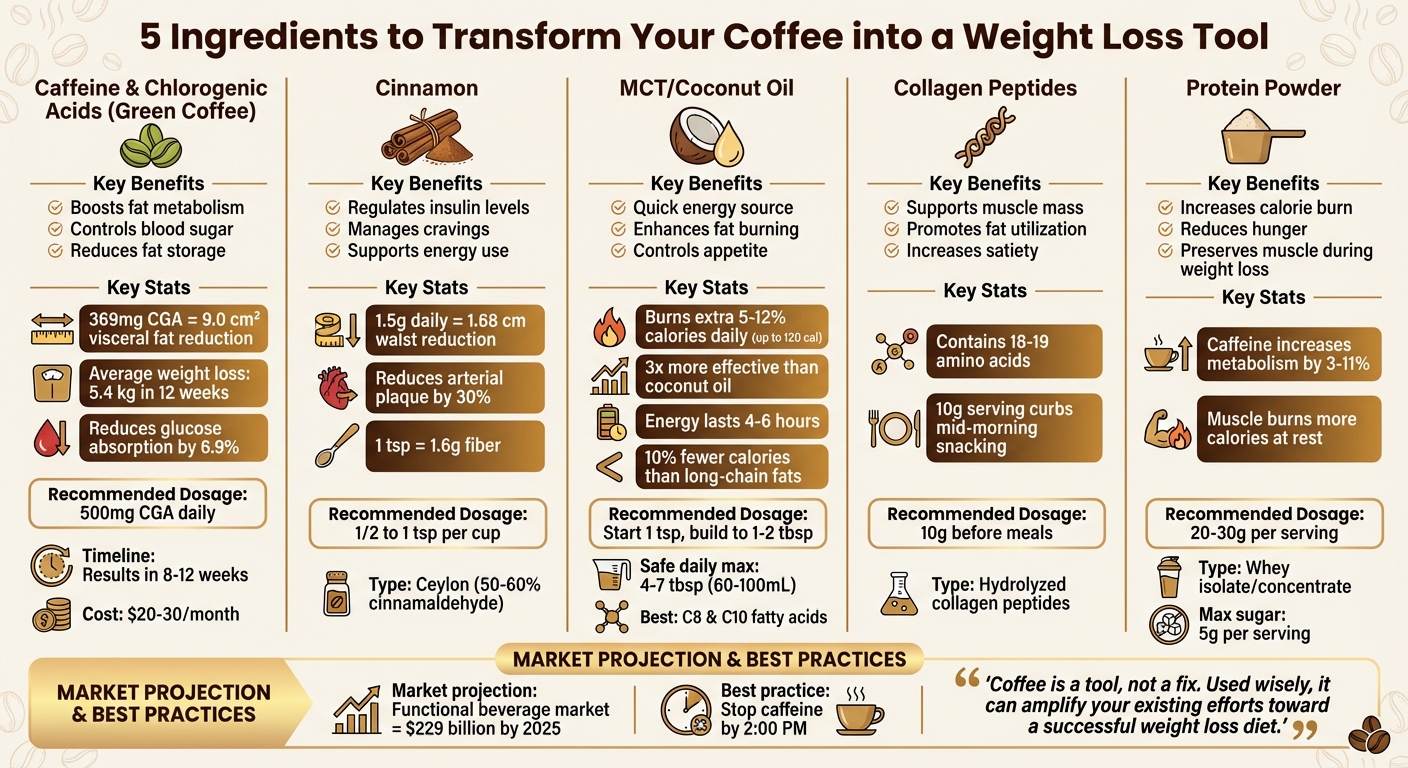
5 Weight Loss Coffee Ingredients: Benefits and Dosage Guide
How To Make Bulletproof Coffee For Weight Loss - Ghee Coffee Recipe - Keto Coffee | Skinny Recipes
sbb-itb-c7947de
1. Caffeine and Chlorogenic Acids
Green coffee packs a powerful duo: caffeine and chlorogenic acids (CGA). Unlike regular roasted coffee, green coffee retains almost twice the concentration of these polyphenols, as roasting destroys most of them.
Metabolism and Fat Burning
Chlorogenic acids activate key liver enzymes like AMPK and PPARα to help burn stored fat while also blocking the creation of new fat by inhibiting ACC1 and ACC2. A study conducted at Fukuhara Clinic in Japan from January to September 2014 tested this on 142 overweight adults. Participants who consumed coffee containing 369 mg of CGA per serving for 12 weeks saw a reduction of 9.0 cm² in visceral fat area. In contrast, the control group drinking regular coffee with only 35 mg of CGA saw just a 1.0 cm² reduction.
Blood Sugar Control and Appetite
CGA also plays a role in managing blood sugar by inhibiting glucose-6-phosphatase, which reduces both liver glucose production and intestinal glucose absorption by 6.9%. This helps prevent insulin spikes that lead to fat storage. Meanwhile, caffeine complements these effects by suppressing appetite when consumed 0.5 to 4 hours before eating. In a 12-week study, participants drinking coffee enriched with CGA lost an average of 5.4 kg, compared to just 1.7 kg in those drinking regular instant coffee.
Antioxidant Protection
Chlorogenic acids also act as antioxidants, defending cells against oxidative stress and inflammation. According to T. Watanabe and colleagues from Kao Corporation, CGA are "polyphenols that have anti-oxidant properties... abundant in green coffee beans".
What to Look For
For noticeable results, choose coffee or supplements that provide at least 500 mg of chlorogenic acids daily. Look for products standardized to contain 45–50% CGA. Consistency is key - most clinical benefits appear after 8 to 12 weeks of daily use. Typically, a month’s supply of green coffee extract supplements costs between $20 and $30.
Next, let’s dive into how cinnamon can amplify the weight loss benefits of your coffee blend.
2. Cinnamon
Cinnamon doesn’t just add a cozy flavor to your coffee - it plays an active role in supporting your metabolism and overall health. It helps improve carbohydrate metabolism, encourages the use of fatty acids for energy, and its compound cinnamaldehyde may even limit the growth of fat tissue.
Blood Sugar and Hunger Control
One of cinnamon's standout benefits is its ability to regulate insulin levels. By doing so, it helps prevent the blood sugar spikes and crashes that often lead to hunger and snacking. As WebMD puts it:
"Spikes in insulin in your bloodstream are a key factor in hunger pangs, so adding cinnamon to your coffee can help to prevent hunger and the urge to snack even more than regular coffee can".
Clinical studies have shown that consuming just half a teaspoon (1.5 grams) of cinnamon daily can reduce waist circumference by 1.68 cm. Plus, one teaspoon of cinnamon contains 1.6 grams of fiber, which can help you feel fuller for longer.
Mental Focus and Heart Health
Cinnamon’s ability to regulate insulin not only curbs hunger but also helps maintain steady energy levels. When combined with caffeine, it enhances mental clarity. On top of that, regular cinnamon consumption may reduce arterial plaque buildup by up to 30%. Packed with antioxidants, cinnamon works hand-in-hand with coffee to boost your metabolism and provide additional health benefits.
What to Look For
When using cinnamon regularly, it’s best to choose Ceylon cinnamon instead of Cassia. Ceylon contains 50–60% cinnamaldehyde, compared to Cassia’s 95%, which makes it a safer option due to lower coumarin levels. Stick to 1/2 to 1 teaspoon per cup for optimal results. Research published in the Clinical Nutrition Journal highlights that cinnamon supplementation can significantly impact obesity-related measures, making it a helpful tool in managing weight.
Up next, we’ll explore how coconut oil and MCT oil can further enhance fat-burning and energy production.
3. Coconut Oil and MCT Oil
Adding coconut oil or MCT oil to your coffee can give your metabolism and energy levels a noticeable boost. Unlike long-chain fats found in butter or olive oil, medium-chain fats in these oils are processed more efficiently by the body.
Fast Energy and Fat Burning
MCTs, or Medium-Chain Triglycerides, are fats with 6–12 carbon atoms that take a shortcut in digestion. Instead of the usual lengthy process, they head straight to the liver, where they're converted into ketones - your body's quick energy source. As registered dietitian Imashi Fernando puts it:
"The shorter the chain, the faster your body is able to break a fat down for energy".
This efficient process sparks thermogenesis, helping you burn an extra 5%–12% calories per day - up to 120 calories. While coconut oil does contain MCTs, pure MCT oil is three times more effective for weight loss because it’s entirely made of fast-acting fatty acids like C8 (caprylic acid) and C10 (capric acid).
Appetite Control and Sustained Energy
MCTs also play a role in managing hunger. They stimulate hormones that signal fullness, reducing cravings. When combined with caffeine, these fats provide a steady energy boost that lasts 4–6 hours - no mid-morning crashes included. Plus, MCT oil has about 10% fewer calories compared to long-chain fats from sources like nuts or avocados.
What to Look For
If you’re new to MCT oil, start small - just 1 teaspoon per day - to avoid potential digestive discomfort like cramps or diarrhea. You can gradually work up to 1–2 tablespoons per cup of coffee as your body adjusts. For the best results, choose MCT oils rich in C8 and C10 fatty acids, as these are the most effective for ketone production. Blend the oil into your coffee using a frother for 20–30 seconds for a creamy, smooth texture.
While coconut oil contains about 55% MCTs, much of it is lauric acid (C12), which behaves more like a long-chain fat and is digested more slowly. If your goal is weight loss, pure MCT oil offers a faster metabolic boost. Studies suggest a safe daily intake of MCT oil is 4–7 tablespoons (60–100 mL).
Next, we’ll explore how collagen peptides can further support weight loss and overall wellness.
4. Collagen Peptides
Adding collagen peptides to your coffee doesn’t just increase its protein content - it can also support your weight loss efforts. Packed with 18–19 amino acids, collagen peptides rely on glycine to stimulate glucagon release, a process that helps your body tap into stored fat for energy. Dr. Kellyann explains it best:
"Glycine promotes fat loss and helps to preserve muscle mass. One way in which this works is by stimulating the release of glucagon - a hormone that releases stored body fat to be used as fuel to make energy."
Sustained Fullness and Calorie Control
Collagen peptides are digested slowly, which helps you feel full for longer and manage your calorie intake more effectively. Consuming a 10-gram serving before meals has been shown to curb mid-morning snacking.
Muscle Support and Metabolism
Collagen plays a key role in maintaining lean muscle mass, which naturally burns more calories even when you’re at rest. It also supports joint health, making it easier to stay active and keep your metabolism humming along.
What to Look For
Opt for hydrolyzed collagen peptides. These dissolve effortlessly in both hot and cold coffee without altering the drink’s texture. For a creamy finish, try using a milk frother. Steer clear of sugary syrups and flavored creamers, as they can cancel out the benefits of collagen by adding unnecessary sugars.
Up next: how protein powder can take your weight loss coffee to the next level.
5. Protein Powder
Protein powder is a simple addition to your coffee that can help you feel fuller for longer, support your metabolism, and maintain muscle mass - all while complementing your weight loss goals.
By mixing protein powder into your coffee, you create a drink that not only provides an energy boost but also helps sustain fullness throughout the day. When paired with caffeine, the benefits of protein powder become even more pronounced, making your coffee work harder for you.
Metabolic Boost and Calorie Burn
Protein has a thermic effect, meaning your body burns more energy digesting it. Combine that with caffeine, which can increase your resting metabolism by 3–11%, and you’ve got a recipe for burning more calories. Kate Patton, a Registered Dietitian at Cleveland Clinic, explains:
"Protein also boosts your metabolism to burn more calories."
This combination not only energizes you but also helps manage hunger - a benefit we’ll dive into next.
Appetite Control
Including 20–30 grams of protein in your coffee can significantly enhance feelings of fullness and reduce hunger signals. The addition of caffeine amplifies these effects, making it easier to resist unnecessary snacking. Patton notes:
"Proffee is a good alternative to just skipping breakfast."
This makes it a practical option for those busy mornings when a sit-down breakfast isn’t feasible.
Muscle Preservation During Weight Loss
When cutting calories, protecting your lean muscle mass is essential. Muscle tissue burns more calories at rest compared to fat, so maintaining it can support your metabolism. Consuming 20–30 grams of protein at breakfast can help preserve muscle while you're in a calorie deficit.
What to Look For
When selecting a protein powder for your coffee, keep these tips in mind:
- Protein Content: Opt for powders with 20–30 grams of protein per serving and no more than 5 grams of sugar.
- Quality Assurance: Look for third-party certifications from organizations like NSF, U.S. Pharmacopeia, or ConsumerLab to ensure safety and quality.
- Type of Protein: Whey isolate or concentrate is ideal for coffee, as it dissolves easily, whereas casein may make your drink too thick.
- Preparation Tips: Use a frother to dissolve the powder in a small amount of liquid before adding it to your coffee for a smooth, creamy texture.
For best results, enjoy your protein coffee in the morning or 30–60 minutes before a workout. To avoid disrupting your sleep, steer clear of caffeine after 2:00 PM.
Conclusion
Breaking down the science behind these ingredients: caffeine, chlorogenic acids, cinnamon, MCT oil, collagen peptides, and protein powder all work together to support your metabolism. Caffeine and chlorogenic acids kickstart your central nervous system and promote fat oxidation. MCT oil and protein powder help you feel fuller for longer, while cinnamon adds flavor without the need for sugary additives. Collagen peptides, on the other hand, help maintain lean muscle mass during weight loss.
"Coffee is a tool, not a fix. Used wisely, it can amplify your existing efforts toward a successful weight loss diet." - Trey Reck from Simple.life
For convenience, you can opt for pre-made blends like those from Lean Joe Bean, or you can create your own DIY version to include these powerful ingredients in your daily routine. Either way, functional coffee should complement your overall weight loss approach. To avoid sleep disturbances, stop caffeine intake by 2:00 PM, and make sure to stay hydrated - water helps balance coffee’s mild diuretic effect.
The functional beverage market is expected to hit around $229 billion by 2025, driven in part by the growing popularity of weight-management drinks. Keep in mind, weight loss coffee works best as part of a bigger plan that includes balanced eating, regular exercise, and staying mindful of hydration levels.
FAQs
Can I combine these ingredients in one coffee?
Yes, you can mix these ingredients into a single cup of coffee. Many weight loss coffee recipes blend items like cinnamon, green coffee bean extract, green tea extract, MCT oil, and apple cider vinegar. These ingredients are often chosen for their potential to support metabolism and fat burning. When combined, they can create a functional drink that aligns with your weight loss efforts.
What’s the best time to drink weight loss coffee?
The ideal time to enjoy weight loss coffee is in the morning, roughly an hour after you wake up. This timing works well with your body's natural hormone levels, helping to kickstart your metabolism and manage your appetite more efficiently.
Who should avoid weight loss coffee ingredients?
People dealing with health issues like heart conditions, high blood pressure, or sensitivity to caffeine should steer clear of certain ingredients found in weight loss coffee, such as green coffee extract. These components might pose risks or lack sufficient evidence of effectiveness. If you have any health concerns, it's always a good idea to consult a healthcare professional before incorporating weight loss coffee into your routine.
Related reading
- How to Choose the Right Weight Loss Coffee for Your Body Type
- Is Coffee Good for Weight Loss? Exploring the Benefits and Myths
- Natural Appetite Suppressant Coffee for Weight Loss
- 6 Best Superfood Ingredients for Morning Coffee
- 7 Ways Coffee May Support Your Weight Loss Goals
- Green Coffee Bean Extract: What It Is and What the Evidence Actually Shows
Ready to put this into practice? Explore Lean Joe Bean Weight Loss Coffee and Superfood Mushroom Coffee.
