
Mushroom Coffee vs Regular Coffee: Which Is Better?
by Joanna Foley
·
If you're deciding between mushroom coffee and regular coffee, here's the quick breakdown:
- Mushroom Coffee: Lower caffeine (40–60 mg per cup), smoother energy without jitters, supports digestion, and may aid focus and stress management. Costs about $36–$45 per container.
- Regular Coffee: Higher caffeine (95–200 mg per cup), stronger energy boost, rich in antioxidants, but can lead to jitters, crashes, and stomach discomfort. Generally more affordable.
Key Considerations:
- Energy: Regular coffee provides a quick, intense boost; mushroom coffee offers steady, mild energy.
- Digestion: Mushroom coffee is gentler on the stomach due to lower acidity and added gut-friendly compounds.
- Health Benefits: Mushroom coffee includes functional mushrooms like Lion's Mane and Reishi for potential cognitive and stress-relief perks.
- Cost: Mushroom coffee is typically double the price of regular coffee.
Quick Comparison:
| Feature | Mushroom Coffee | Regular Coffee |
|---|---|---|
| Caffeine (per cup) | 40–60 mg | 95–200 mg |
| Energy Boost | Gradual, steady | Quick, intense |
| Digestion | Gentler on stomach | May cause discomfort |
| Health Add-ons | Functional mushrooms | Antioxidants |
| Cost | $36–$45 per container | More affordable |
Choose based on your energy needs, digestive sensitivity, and budget.
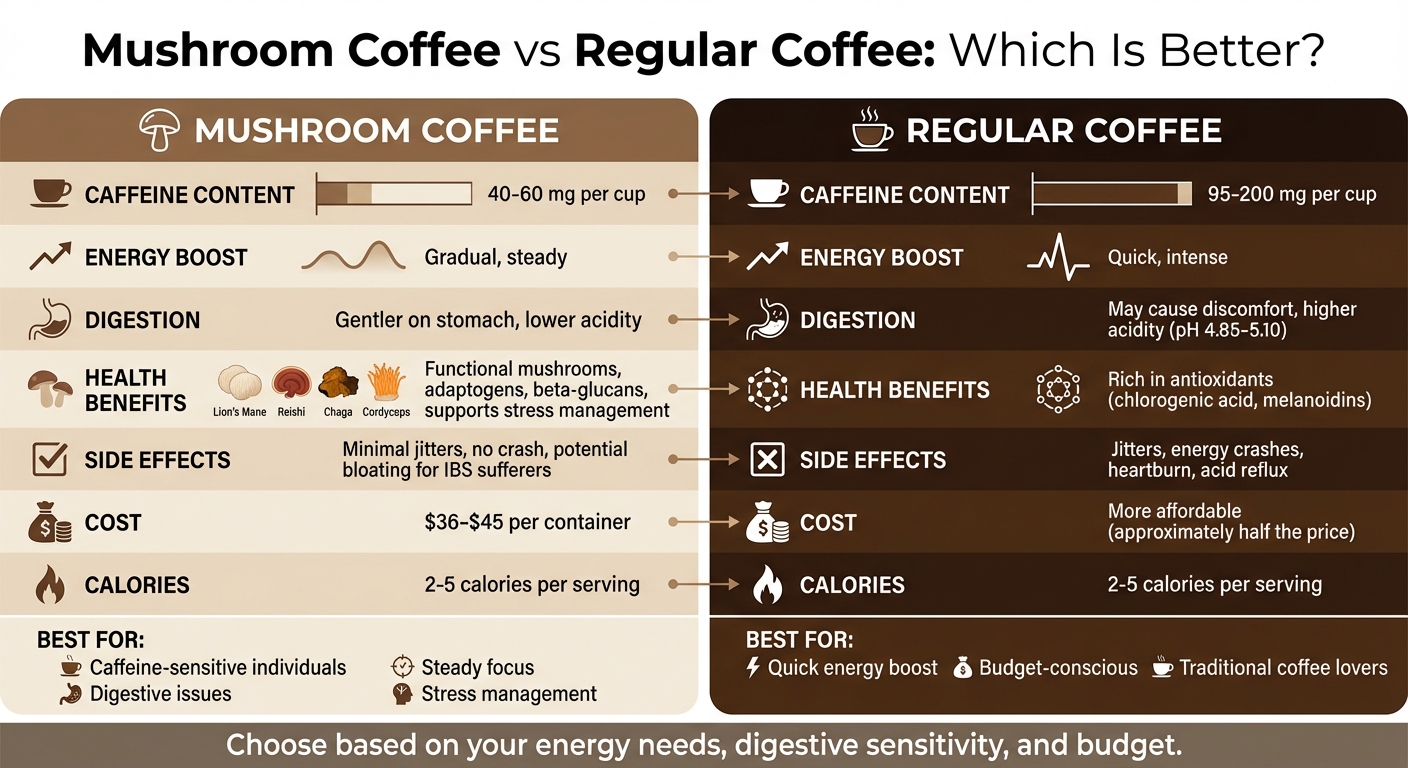
Mushroom Coffee vs Regular Coffee: Complete Comparison Chart
Caffeine Content and Energy Levels
How Much Caffeine Each Contains
When it comes to caffeine, regular coffee packs a much bigger punch than mushroom coffee. An 8-ounce cup of regular coffee contains anywhere from 95 to 200 mg of caffeine, depending on factors like the roast and brewing method. Mushroom coffee, on the other hand, typically has about 40–60 mg per serving - roughly half as much caffeine - because part of the coffee is replaced with caffeine-free mushroom powder. For example, Four Sigmatic Instant with Lion's Mane contains 50 mg of caffeine, while Tiger 2 Mushroom Coffee with Lion's Mane and Chaga has around 60 mg. This reduced caffeine content directly influences how each type of coffee affects your energy levels throughout the day.
Energy Patterns Throughout the Day
Regular coffee works fast, with its effects peaking between 15 minutes and 2 hours after consumption. But it’s a double-edged sword - it can lead to jitters and a sharp energy crash later on. Mushroom coffee, in contrast, provides a smoother, more consistent boost. Sarah Garone, a licensed nutritionist, explains it well: "Regular coffee delivers a faster, stronger caffeine boost, while mushroom coffee offers a gentler lift". The lower caffeine levels, combined with functional mushrooms like Cordyceps and Reishi, help support steady energy and manage stress, reducing the likelihood of a dramatic energy dip.
If you’re looking for a quick jolt to power through a short task, regular coffee’s higher caffeine might be your go-to. But if you’re caffeine-sensitive or need consistent focus throughout the day, mushroom coffee’s balanced approach could be the better fit.
sbb-itb-c7947de
Digestive Health and Side Effects
Acidity and Stomach Comfort
Regular coffee's acidity, with a pH between 4.85 and 5.10, can be tough on sensitive stomachs. This acidity, combined with caffeine, can lead to issues like heartburn, acid reflux, or GERD. For individuals prone to digestive discomfort, this can make enjoying a cup of coffee a challenge.
Mushroom coffee, however, offers a gentler alternative. Thanks to the alkaline properties of mushrooms, it helps neutralize caffeine's acidic effects. Plus, with almost half the caffeine, it’s less likely to cause the jitters or stomach irritation often linked to regular coffee. On top of that, functional mushrooms such as Reishi and Chaga contain anti-inflammatory triterpenoids, which may help soothe the digestive tract. That said, for those sensitive to high-FODMAP foods, mushrooms could potentially cause bloating or gas.
"Mushrooms contain polysaccharides, which may actually contribute to bloating in IBS sufferers that are sensitive to this food group",
explains Dr. Aja McCutchen, a gastroenterologist.
This milder formulation not only reduces the risk of acid-related irritation but also promotes a more comfortable digestive experience.
Gut Health Benefits
Mushroom coffee doesn't just ease stomach discomfort - it also supports gut health. Functional mushrooms like Turkey Tail and Lion's Mane are rich in beta-glucans, which feed beneficial gut bacteria such as Lactobacillus and Bifidobacterium. These mushrooms can help maintain a balanced gut microbiome, which is essential for overall health. Additionally, Lion's Mane may aid in protecting the intestinal lining and could even help prevent digestive ulcers. Regular coffee, by contrast, primarily acts as a stimulant without offering these added gut-friendly benefits.
If you're thinking about trying mushroom coffee for its digestive perks, start slowly. Introduce one type of mushroom at a time to gauge how your body responds before exploring more complex blends. Also, be cautious with Chaga-based varieties if you have a history of kidney stones. Chaga is high in oxalates, which can increase the risk of kidney stones. In one documented case, a man developed acute kidney issues after consuming 10–15 grams of Chaga powder daily for three months.
Nutritional Benefits and Functional Ingredients
Antioxidants and Polyphenols
Regular coffee is a great source of antioxidants like chlorogenic acid and melanoidins, which help protect cells from oxidative stress and inflammation. In fact, for many Americans, coffee is their main dietary source of antioxidants. Mushroom coffee takes it a step further by adding active mushroom compounds such as beta-glucans, polysaccharides, and triterpenes. It also packs in vitamins (B1, B2, B12, C, D, and E), essential amino acids, and minerals like selenium and zinc. Chaga mushrooms, in particular, are known for their high antioxidant levels, which can even surpass those in many fruits and vegetables.
"Mushrooms in general have some really great benefits. A big one tends to be reducing inflammation. Mushrooms also contain antioxidants, which can help support the immune system."
- Beth Czerwony, RD, Cleveland Clinic
While regular coffee provides antioxidants, mushroom coffee offers the added advantage of these functional mushroom compounds. However, experts, including registered dietitians, point out that the benefits are more significant when consuming whole mushrooms rather than processed extracts. Additionally, there’s limited research on how well these beneficial compounds hold up after being dried, processed, and brewed at high temperatures. Still, these extra nutrients contribute to mushroom coffee’s reputation for aiding stress management and mental clarity.
Stress Management and Mental Clarity
Mushroom coffee doesn’t just stop at antioxidants - it also includes adaptogens that help manage stress and support cognitive function. Adaptogens like Reishi, Chaga, and Cordyceps work to regulate cortisol levels and balance the hypothalamic-pituitary-adrenal (HPA) axis, which governs the body’s stress response.
"Adaptogens help keep balance in our hypothalamic, pituitary and adrenal glands by tweaking hormone production so our body can function at its best."
- Keri Gans, MS, RDN, CDN
Lion’s Mane mushroom, another key ingredient, is packed with erinacines and hericenones. These compounds stimulate nerve growth factor (NGF), promoting brain health and enhancing neuroplasticity. A 2023 study highlighted that a single dose of Lion’s Mane improved task speed and reduced stress in healthy young adults. Over 16 weeks, supplementation significantly boosted cognitive scores in adults with mild cognitive impairment.
While regular coffee can improve focus and mood when consumed in moderation (about one to three cups daily), it doesn’t offer the neuroprotective or stress-regulating properties of mushroom coffee. In fact, high caffeine consumption may raise cortisol levels and contribute to anxiety. Mushroom coffee, with its lower caffeine content (around 50–60 mg per cup compared to 95–150 mg in regular coffee), combined with adaptogens, provides a smoother, more balanced cognitive boost. These functional ingredients may also support metabolism and overall well-being, making it a potential ally in weight management.
Weight Loss and Wellness Goals
Metabolism and Energy Support
A regular cup of coffee, with its high caffeine content (around 95 mg per cup), can kickstart thermogenesis - your body's way of burning calories for heat. However, this often comes with a downside: the dreaded energy crash and the rebound hunger that follows. On the flip side, mushroom coffee offers a gentler alternative. With about 45–50 mg of caffeine per cup and the addition of adaptogenic mushrooms like Reishi, Chaga, and Cordyceps, it provides a more balanced energy boost. These mushrooms are also believed to enhance aerobic performance.
"Caffeine can suppress appetite, but it can lead to rebound cravings once it wears off. Low-caffeine mushroom coffee may provide a steadier energy without that crash, which could help reduce overeating later in the day."
- Mascha Davis, RDN
This smoother energy release not only supports your metabolism but may also play a role in regulating appetite.
Appetite Control and Calorie Impact
When it comes to calories, both regular and mushroom coffee are impressively low, typically containing just 2 to 5 calories per serving. For instance, Lucid Coffee offers blends with as few as 2 calories. But the real difference lies in how they affect your appetite. Mushroom coffee contains beta-glucans, a type of soluble fiber that can help you feel fuller for longer and reduce cravings. By delivering consistent energy, it helps to avoid hunger crashes and keeps those high-calorie temptations at bay.
If you're looking for functional coffee blends, brands like Lean Joe Bean offer instant mushroom superfood coffee infused with extras like green coffee beans and Garcinia Cambogia. A one-month supply (24 single-serving packets) is priced at $36.95.
Mushroom Coffee In-Depth Review....Four Sigmatic, Ryze, Eightbillion, and MudWtr

Taste, Preparation, and Convenience
When it comes to your daily brew, the way it tastes and how easy it is to prepare can be just as important as its health perks.
Flavor Differences
Regular coffee is known for its bold, full-bodied flavor. Depending on the roast, you might pick up notes of dark chocolate, nuts, or even fruity and citrusy hints. But it’s also often bitter and acidic, which some people love, while others might find it too harsh. On the other hand, mushroom coffee offers a much milder taste. Its earthy, nutty profile comes from the medicinal mushrooms blended in, which also help tone down the bitterness and acidity of traditional coffee [25, 26, 29].
"Interestingly enough, mushroom coffee tastes pretty similar to regular coffee. It is, after all, coffee with mushroom extracts blended in."
- Beth Czerwony, Registered Dietitian, Cleveland Clinic
In high-quality mushroom coffee blends, the mushroom flavor is subtle - barely noticeable, with just a hint of earthiness. However, some blends that include cacao or ground mushrooms may have a slightly grainy texture because natural ingredients aren’t always fully water-soluble. If that’s an issue, adding a creamer with fats like butter or coconut milk can help smooth things out.
So, whether you prefer the bold punch of regular coffee or the gentler, earthy notes of mushroom coffee, the choice often comes down to personal taste. But flavor isn’t the only factor - how you prepare your coffee matters too.
Preparation Methods
Making regular coffee can be a bit of a ritual. It often involves grinding beans, measuring water, and using tools like a drip machine, French press, or pour-over setup. For some, this process is part of the joy, but it can also be time-consuming.
Mushroom coffee, on the other hand, is designed for convenience. Many brands offer instant powders that you simply stir into hot or cold water - perfect for quick lattes or iced coffee [30, 4]. You can also find pre-mixed grounds, single-serve pods, or even liquid extracts, making it a great option for busy mornings or when you’re on the go [25, 3].
Whether you’re drawn to the ritual of brewing or the simplicity of instant preparation, there’s an option to fit your lifestyle.
Which Coffee Is Right for You?
Deciding between mushroom coffee and regular coffee comes down to your personal health goals, caffeine tolerance, and budget. There's no one-size-fits-all answer here - each option caters to different needs.
Regular coffee delivers a quick energy surge with about 96 mg of caffeine per 8 oz cup, thanks to its ability to boost adrenaline and enhance fat oxidation. Plus, it’s generally more affordable, costing about half as much as premium mushroom coffee blends. If you’re looking for a cost-effective way to stay energized, regular coffee might be your go-to.
On the other hand, mushroom coffee is a better fit if you’re focused on stress relief, avoiding caffeine jitters, or managing a sensitive stomach. Each serving contains roughly 50 mg of caffeine, offering a more gradual energy boost without the typical crash. Reishi-infused blends may help with cortisol regulation, while the lower acidity is gentler on digestion. For mental clarity, Lion’s Mane varieties are often chosen for their potential to support focus without triggering anxiety.
Health considerations: If you have kidney issues, avoid Chaga-based blends. Additionally, if you're taking blood thinners, diabetes medications, or immunosuppressants, consult your healthcare provider before trying mushroom coffee.
For a balanced approach to energy and metabolism, products like Lean Joe Bean’s Mushroom Superfood Coffee offer a mix of traditional and mushroom-enhanced benefits. Priced at $36.95 for a one-month supply, it’s competitive compared to other premium mushroom coffee brands, which typically range from $36 to $45 per container.
FAQs
Is mushroom coffee safe to drink every day?
Mushroom coffee is typically safe for most people to enjoy daily, but there are a few things to keep in mind. If you have allergies to mushrooms, digestive sensitivities, kidney concerns, or take specific medications, it’s best to steer clear. While some claim it helps with stress and focus, the research backing these benefits is still limited, and the quality of products can differ widely. To stay on the safe side, stick to moderate consumption and check with a healthcare professional if you have any health conditions.
Which mushrooms in mushroom coffee do what?
Mushroom coffee typically features reishi, chaga, and lion’s mane mushrooms, each known for its distinct perks. Reishi is often associated with reducing stress and supporting immune health. Chaga is packed with antioxidants, which may help strengthen immunity. Meanwhile, lion’s mane is celebrated for enhancing focus and promoting mental clarity.
These mushrooms undergo a process where they are dried, ground, and extracted to concentrate their beneficial compounds. The resulting blend is combined with coffee, offering a drink that aims to support immune health, sharpen mental focus, and help manage stress.
Will mushroom coffee affect my medications?
Mushroom coffee has the potential to interact with specific medications, particularly blood thinners, diabetes medications, and immunosuppressants. This is largely due to the immune-modulating properties of mushrooms like Reishi and Chaga. These adaptogenic mushrooms can influence immune responses and hormonal activity, which might interfere with treatments targeting these systems.
If you're taking medication for blood clotting, blood sugar regulation, or immune function, it's essential to consult your healthcare provider before incorporating mushroom coffee into your diet. This ensures that it won’t disrupt your treatment or cause unintended side effects.
Related reading
- Mushroom Coffee and Immunity: Boosting Your Health Naturally
- Ryze Mushroom Coffee: Benefits & Reviews
- In-Depth Four Sigmatic Review: Are Their Functional Mushroom Products Worth It?
- Lion's Mane Coffee: Benefits, Evidence, and How to Use It
Ready to put this into practice? Explore Lean Joe Bean Weight Loss Coffee and Superfood Mushroom Coffee.
